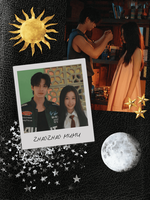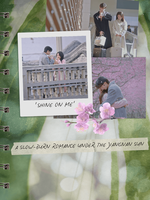
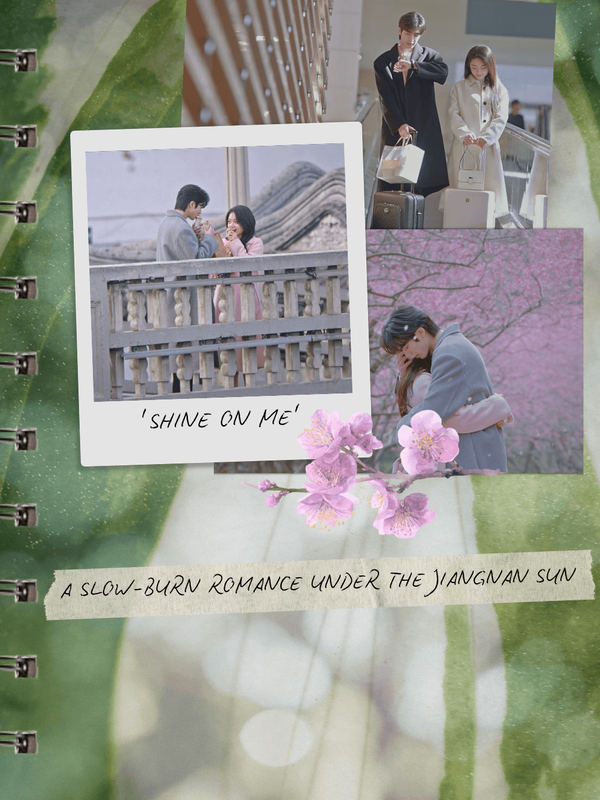

Watching Shine on Me is like receiving a warm hug as we are welcomed into the Jiangsu–Zhejiang–Shanghai region of eastern China. The drama is peppered with local habits, regional jokes, and cultural details, delivered with the affectionate teasing you’d give a loved one — the kind that comes from knowing and loving a person or a place from the inside out, quirks and all.
Known colloquially as Jiang-Zhe-Hu (江浙沪 Jiāng Zhè Hù), this area lies at the heart of Jiangnan (江南 Jiāngnán), the cultural region south of the Yangtze River, celebrated for its fertile landscapes, gardens, waterways, and traditions of silk, tea, and scholarly pursuits. Centered in Suzhou, Wuxi, and Shanghai, the drama is a modern urban romance starring Song Weilong as Lin Yusen and Zhao Jinmai as Nie Xiguang, adapted for the screen by Jiangsu native Gu Man from her novel of the same name.
The drama’s Chinese title evokes the blazing sun of midsummer, while its main characters’ names symbolize dawn, forests, and growth. Its storyline unfolds in the photovoltaic industry, where sunlight is converted into sustainable energy — a process that becomes the drama’s central metaphor. Sun and warmth permeate the drama, shaping a story about inner growth and a love that is sustaining without smothering, where two people offer each other light and steady support while still leaving room for each to grow as an individual. It celebrates the courage it takes to move from seeking external validation to finding self-assurance.
Here is an insider’s guide to this world: the symbolism behind the title, the meanings embedded in names, the philosophy that drives Gu Man’s storytelling, and a tour of the real places, tastes, and textures of Jiang-Zhe-Hu that make ‘Shine on Me’ a love letter to home.
Blazing Sun in Chinese Title
Some loves burn out. Others endure, transforming light into steady energy that powers us forward. In a healthy relationship that prioritizes care over chaos, romantic chemistry becomes fuel for growth and understanding rather than something that depletes us.
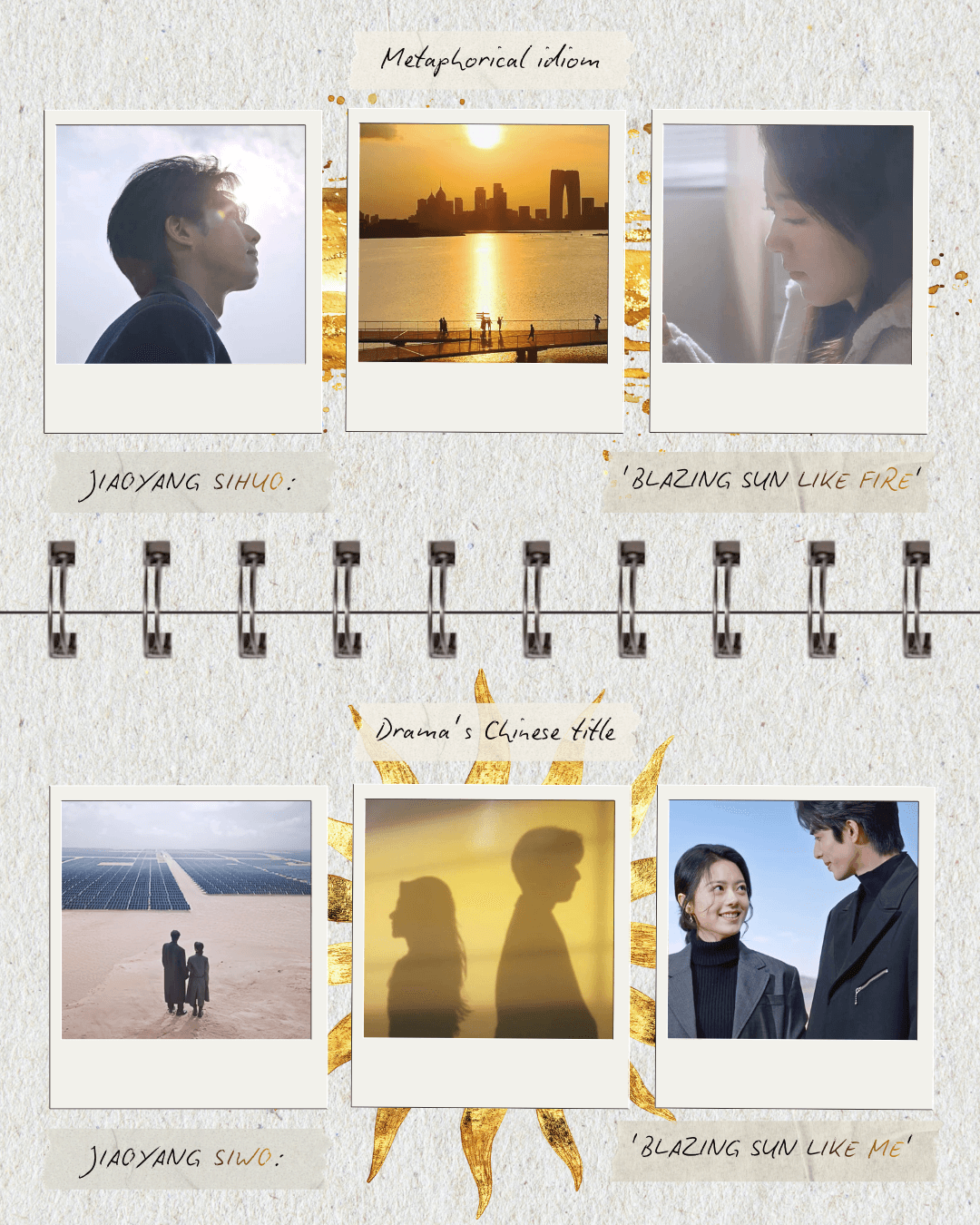
The drama’s Chinese title, Jiaoyang Siwo (骄阳似我 Jiāoyáng Sìwǒ), translates literally as ‘Blazing Sun Like Me.’ Jiaoyang (骄阳 jiāoyáng) is a literary compound meaning a blazing, midsummer sun — brilliant, intense, and generous with its light.
The expression ‘blazing sun’ can be traced to the Tang dynasty, appearing in Li Bai’s poem《感时留别从兄徐王延年从弟延陵》Gǎnshí Liúbié Cóngxiōng Xúwáng Yánnián Cóngdì Yánlíng, meaning ‘Moved by the Times, Staying Behind to Bid Farewell to My Elder Cousin, Prince of Xu Yannian and My Younger Cousin, Yanling.’
In the poem, Li Bai writes:
“How fiercely the blazing sun shines, making the sea shimmer and the dragon-turtles gleam.”
骄阳何太赫,海水烁龙龟。
jiāoyáng hé tài hè, hǎishuǐ shuò lóngguī
This ‘blazing sun’ is embedded into the drama’s design on multiple levels. It lives in Nie Xiguang and Lin Yusen, and in the photovoltaic industry that shapes their daily lives — an industry built on harnessing sunlight as a sustainable energy source. Their relationship follows a similar principle, allowing intensity to settle into steadiness and feeling to deepen into trust. The drama’s title, workplace setting, and love story move in tandem, with a deliberate symbolic logic.
The drama’s title also plays on the idiom jiaoyang sihuo (骄阳似火 jiāoyáng sìhuǒ), meaning ‘blazing sun like fire,’ a phrase used to describe the fierce, fire-like intensity of the summer sun. Where the idiom ends in ‘fire’ (huǒ), Gu Man's title ends with ‘me’ (wǒ). While huǒ and wǒ sound much alike, the substitution changes the meaning completely. Gu Man reframes the blazing sun as not just an external force, but as something coming from within — steady and self-assured rather than destructive. This is a story about becoming our own source of warmth and strength.
In a promotional interview for the drama, actress Zhao Jinmai offers her own interpretation of the title:
For me, ‘Blazing Sun’ is definitely intense and passionate, slowly radiating its own light…
Even if, in the drama, Lin Yusen may have waited for Nie Xiguang, the truth is that he is ultimately the one who leads himself out of the darkness. So I think everyone — each and every one of us — is our own ‘Blazing Sun.’
Likewise, Nie Xiguang’s journey isn’t about being rescued. It’s about her learning to trust herself, to follow her own light, even when self-doubt creeps in. Lin Yusen offers steadfast support, but she does the growing.
From ‘Love O2O,’ to ‘You Are My Glory,’ and now ‘Shine on Me,’ Gu Man excels at writing this kind of gradual and positive character development. As she shares on Weibo:
Time flows like water, and many things have changed. Yet amid all these changes, there are always things that remain the same, such as the longing for love and sincerity, whether it comes from family, friendship, or romance. So I hope ‘Shine on Me,’ like my other works, can once again bring everyone joy and warmth through the love and sincerity it hopes to express.
Tiffilosophy Picks:
300 Tang Poems translated by Xu Yuanchong, bilingual Chinese-English edition.
Keychain inspired by ‘Shine on Me’ by EmveebyM on Etsy.
Plush Blanket inspired by ‘Shine on Me’ by artsbylyks on Etsy.
Meanings Behind Characters’ Names
Nie Xiguang: Dawn Light
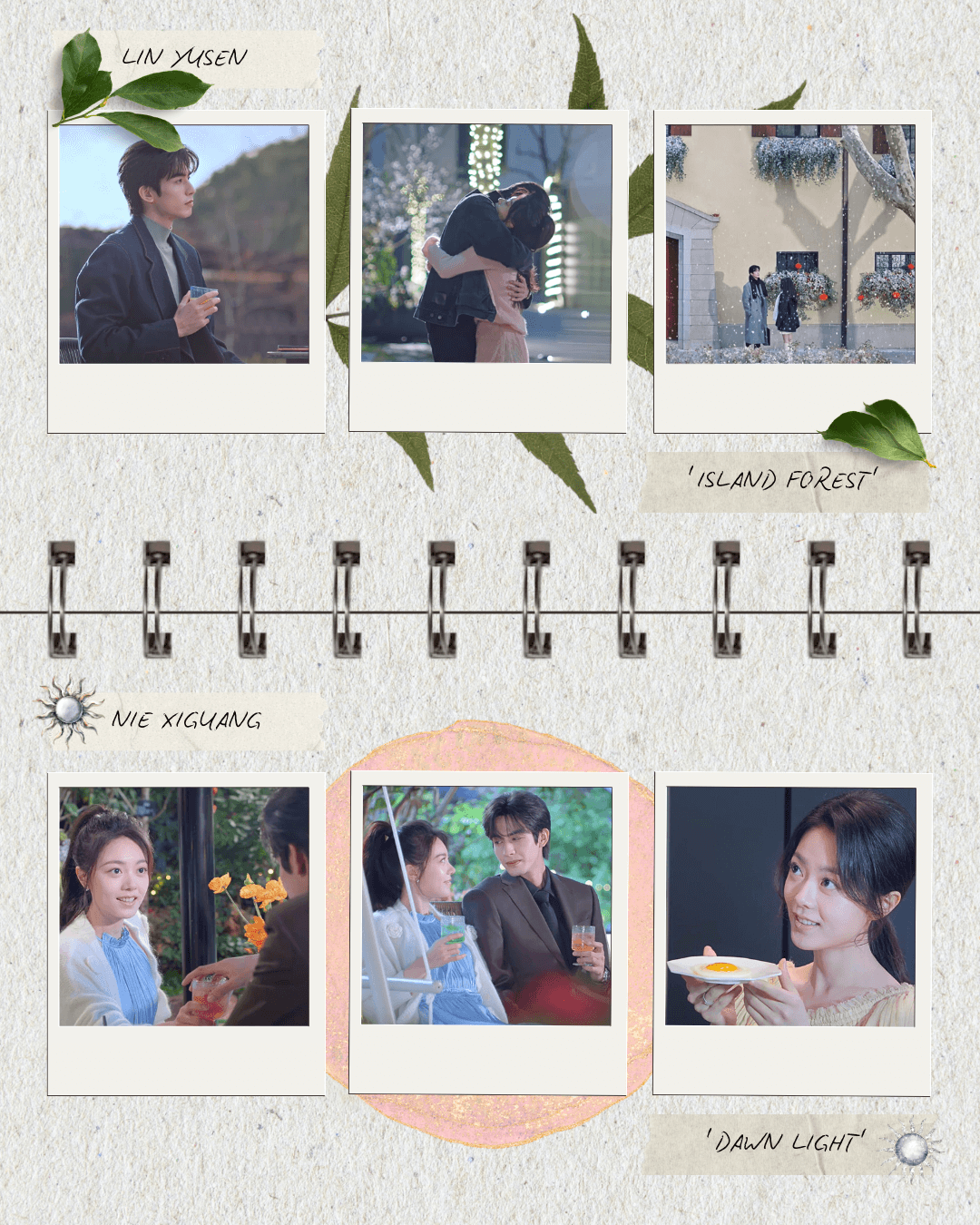
Nie Xiguang’s name (聂曦光 Niè Xīguāng) contains two characters related to light. Xi (曦 xī) refers to sunlight, particularly at dawn or in the early morning. Paired with guang (光 guāng), meaning ‘light’ or ‘radiance,’ her given name suggests ‘dawn light.’
Dawn light carries a particular quality: quiet, clarifying, healing. It marks the turning point when darkness yields, and warmth begins to spread, signaling a new beginning.
In Chinese naming tradition, characters associated with light are often chosen because they convey hope, integrity, and progress through guidance, warmth, and clarity — qualities that many parents wish to instill in their child.
Lin Yusen: Island Forest
Lin Yusen’s name (林屿森 Lín Yǔsēn) conjures the imagery of an island thick with trees. Lin (林 lín) is a common surname meaning ‘forest,’ Yu (屿 yǔ) means a ‘small island’ or ‘islet.’ Sen (森 sēn) describes a dense, layered forest.
The characters in his name paint a solitary island forest, suggesting someone reserved yet grounded and capable of deep feeling. His name also conveys growth, with a forest of trees steadily growing toward sunlight. Notably, both lin (林) and sen (森) contain the wood radical (木), making the name rich in the wood element. In the Five Phases (五行 wǔxíng) of Chinese cosmology, wood is associated with spring and the energies of growth, renewal, and expansion.
In the story, Lin Yusen is a surgeon whose life changes after an accident, pushing him to leave medicine and build a new career in the photovoltaic industry. Read this way, the ‘island forest’ emphasizes transformation — someone learning to adapt and grow in another direction and to express his gifts in a new form.
Reciprocal Names
The names Nie Xiguang and Lin Yusen form a naturally balanced pairing: Nie Xiguang carries two characters for ‘light,’ while Lin Yusen carries two for ‘forest.’ Together, they bring to mind the modern expression shuangxiang benfu (双向奔赴 shuāngxiàng bēnfù), meaning ‘running toward each other’ in mutual reciprocity, like sunlight beaming down as trees reach upward toward the light.
Zhuang Xu: The Prologue
Zhuang Xu (庄序 Zhuāng Xù), the second male lead played by Lai Weiming, has a name that foreshadows his role in the story. His given name is the single character Xu (序 xù), meaning ‘preface’ or ‘introduction.’ As Nie Xiguang’s first crush and as someone who struggles to articulate his feelings, Zhuang Xu represents the opening chapter of her emotional growth: the prologue, not the main narrative.
Love Letter to Jiang-Zhe-Hu
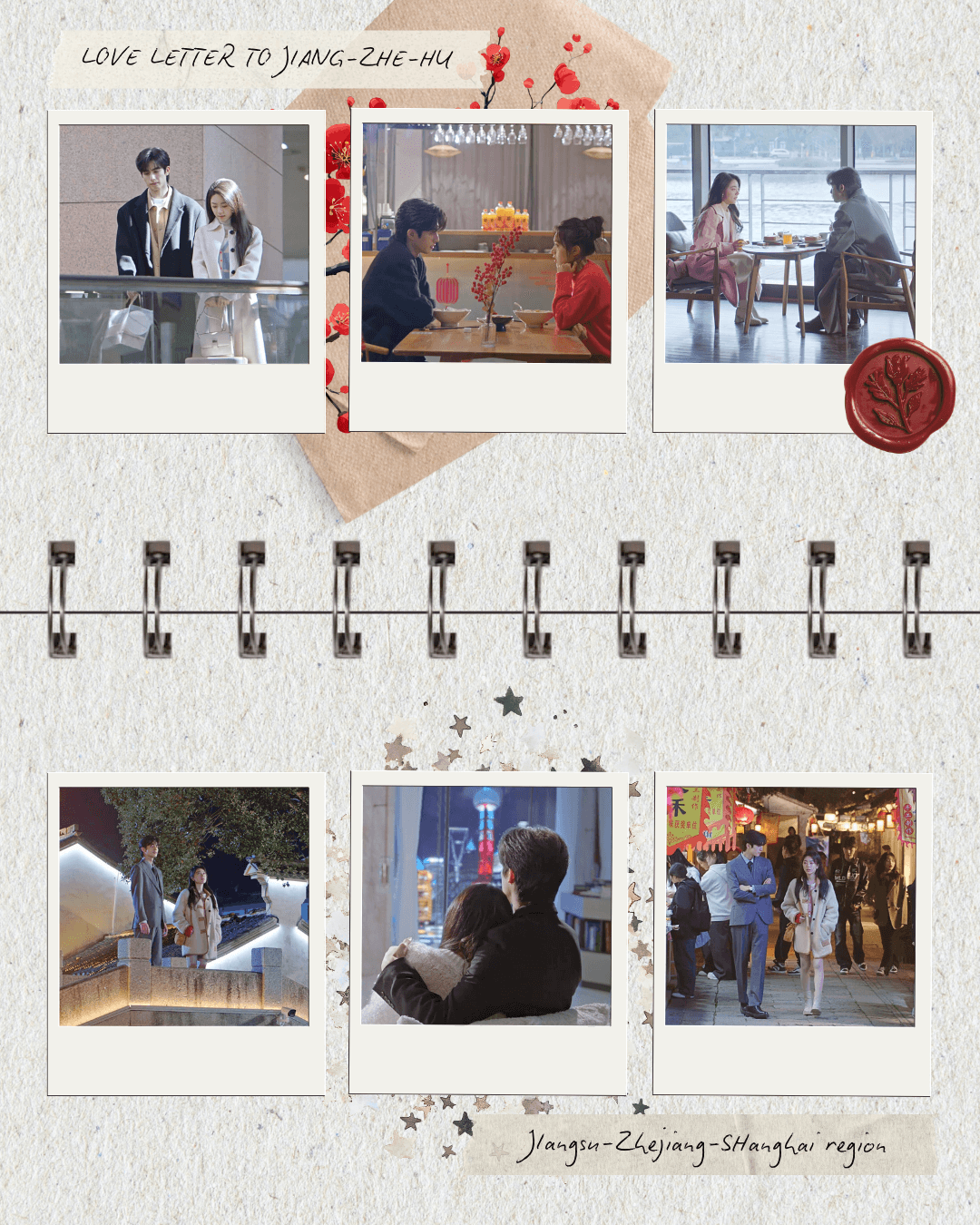
The Jiang-Zhe-Hu region is more than just a backdrop or tourism drive for the drama. Place intimately shapes the drama’s voice and the way its characters speak, think, and relate to each other. Jiang (江 Jiāng) stands for Jiangsu, Zhe (浙 Zhè) for Zhejiang, and Hu (沪 Hù) for Shanghai. This shorthand for Shanghai is derived from Hudu (沪渎 Hùdú), an early place name from the Jin dynasty for the lower Songjiang area. The name combines hu (沪 hù), referring to a traditional bamboo fishing tool used by fishermen, and du (渎 dú), meaning estuary or inlet, for the area where waterways flowed into the sea.
The drama’s authenticity comes from multiple sources — the writer, the production team, and on-location filming in real shops, stations, universities, and attractions across the region. Born in Yixing, a county-level city under Wuxi in Jiangsu province, and educated at Nanjing Audit University, Gu Man is a born-and-bred Jiangsu local who knows the area very well. Meanwhile, the lead production company, Xixi Pictures, is based in Shanghai. This combination grounds the drama in lived experience, from dialect-inflected family banter to the rhythms of daily life in Suzhou, Wuxi, and Shanghai.
In the story, Nie Xiguang is from Wuxi, Lin Yusen is from Shanghai, and they meet while working in Suzhou’s photovoltaic industry. Gu Man writes hometown life and family dynamics with the ease of someone sketching portraits of her own relatives. Her warmth is laced with gentle ribbing that feels unmistakably Jiangnan. The tone throughout is never exaggerated or performative, just quietly confident and proud, like its characters.
While actress Zhao Jinmai isn’t a Wuxi native, she delivers a convincing local accent when speaking to her grandparents, adding a considered layer of authenticity and lived-in detail.
The ‘Jiang-Zhe-Hu Only Daughter’
In 2023, the concept of the ‘Jiang-Zhe-Hu Only Daughter’ (江浙沪独生女 Jiāng Zhè Hù dúshēngnǚ) went viral in China. At its core is the aspirational image of a ‘spirited heiress with a strong sense of self’ (拥有丰盈自我的率性千金 yōngyǒu fēngyíng zìwǒ de shuàixìng qiānjīn). She’s confident, empowered, unafraid to voice her opinions, to confess to whoever she likes without fear of rejection, and she doesn’t just want love. She is self-aware and insists on building a life with romance rather than in service to it.
This image particularly strikes a chord with young Chinese female audiences today. On the whole, she represents a healthy, aspirational role model for women, and the drama portrays this beautifully through Nie Xiguang and the strong-minded women in her family across generations.
The area’s socioeconomic conditions gave rise to this archetype. The Jiangsu–Zhejiang–Shanghai region enjoys relatively strong economic conditions, abundant resources, and a favorable geographic location. Daughters in these families often have greater access to opportunities. The archetype suggests a comfortable upbringing, exclusive parental devotion, quality education, and a smooth life trajectory that permits flexibility. Perhaps they grow up knowing that no matter where they go or what challenges they face, home remains a safe harbor and a place to fall back on.
Like any archetype, it simplifies a complex reality. It’s fair to note that it idealizes privilege or romanticizes an affluent upbringing. Yet examining its appeal reveals meaningful insights into values, hopes, and aspirations in contemporary Chinese society — some of which cross cultural boundaries. Understanding why this ideal resonates also enables us to read the drama more deeply within broader pop culture and explore these beliefs with nuance.
The archetype carries its own tensions, and the drama does not shy away from them. Being a ‘Jiang-Zhe-Hu Only Daughter’ gives young women like Nie Xiguang a head start, but it does not necessarily guarantee a life of ease. Nie Xiguang’s growth in the drama is partly about honoring the love she was raised in while stepping beyond its protective radius. She finds her own footing in the photovoltaic industry and becomes someone capable of supporting herself and leading a company.
Meanwhile, the ‘Jiang-Zhe-Hu Only Son’ (江浙沪独生子 Jiāng Zhè Hù dúshēngzǐ) is emerging as a complementary archetype. He is seen as new-age husband material, highly valued for his handsome, warm, gentle, successful, and well-educated qualities. Lin Yusen, with his good looks, cultured Shanghai upbringing, and sharp intellect, fits the profile.
Regional Inside Jokes
The drama shows it really knows a place through its self-deprecating jokes, playful offhand comments, and effortlessly integrated references that locals instantly recognize. Here is a closer look at the cultural quirks and references subtly worked into the story.
Jiangsu Nightlife
In one scene, Nie Xiguang suddenly remembers they forgot to try a roast goose restaurant in Guangzhou.
“It’s still early,” Lin Yusen reassures her. “Let’s go now.”
Nie Xiguang glances at Lin Yusen’s watch. “It’s already 10 p.m.”
Lin Yusen smiles. “This is Guangzhou, not Jiangsu.”
This quip about Jiangsu’s non-existent nightlife has become a running joke among locals. The topic even trended on Weibo in 2023 under the hashtag #JiangsuIsAnEarlyToBedEarlyToRiseProvince#. By 8 p.m., many main streets are already empty, and when Jiangsu residents visit Chinese cities renowned for their nightlife, like Changsha, Chengdu, or Chongqing, they joke about needing to “adjust for jet lag.”
Historically, Jiangsu’s nightlife was legendary. In old Suzhou, once known as Gusu, Shantang Street’s night markets bustled until dawn during the Tang dynasty, defying imperial curfews. By the Ming dynasty, night touring Tiger Hill had become a Mid-Autumn tradition, with crowds gathering to watch the moon. Nanjing’s Qinhuai River hosted lantern festivals with hundreds of decorated boats lining its banks, and Yangzhou was famous for its late-night bathhouses, which boomed during the Qing dynasty.
In the last few decades, partly as economic priorities shifted and population growth spread across industrial areas rather than concentrating in dense urban cores, Jiangsu’s nights began to wind down earlier. Greater emphasis on work and school schedules now means earlier bedtimes, and the region has embraced this rhythm without apology. What Jiangsu lost in vibrant nightlife, it gained in the embrace of early mornings. Fresh produce arrives, and lotus markets open at the crack of dawn. A flourishing morning tea culture has also developed in the region.
Suzhou Library Banter
Nie Xiguang is browsing Lin Yusen's enviable book collection at his house when he can’t resist a playful dig.
“Even Suzhou Library only allows you to borrow five books at a time, right?” Lin Yusen teases, at the same time, taking a jab at the library’s borrowing limits.
“One more word, and I’m telling Aunt Sheng,” Nie Xiguang shoots back, jokingly threatening to report him to his mother. “You know, we added each other on WeChat over the holidays.”
Suzhou Library, it turns out, was watching the drama’s broadcast. The library issued a hilariously tongue-in-cheek public response on RedNote to set the record straight:
To Mr. Lin Yusen: Explanation regarding borrowing limits 📖
Dear Mr. Lin Yusen,
Suzhou Library has always been committed to providing readers with convenient and welcoming reading services. We understand your and Ms. Nie Xiguang’s love of reading, and we have also noted your questions about borrowing limits. Here, we would like to explain our library’s borrowing rules in detail.
At present, the borrowing limit on a Suzhou library adult reader’s card is 20 books. If, in the future, you and Ms. Nie Xiguang establish a family and have a minor under the age of 16, you may present the household register and apply for a Family Card. This card allows you to borrow up to 50 books at a time.
One book, one world. Let reading help us grow together. Suzhou Library wishes you and Ms. Nie a happy life, and we look forward to accompanying you with books in the days to come, providing warmer, more thoughtful reading services for you and your family.
The post announces Suzhou Library’s increased borrowing limit as a clapback, casually nudging the couple to start a family, which would unlock a Family Card and let them borrow even more books. This is peak nosy-auntie-librarian energy: warm, helpful, yet meddling, all at the same time.
The Airport Situation
“It’s the weekend, so I didn’t call the driver. We can hail a taxi back”, Lin Yusen offers.
“It’s a hassle that Suzhou has no airport,” Nie Xiguang remarks, barely suppressing a smile.
“Mm,” Lin Yusen acknowledges, looking away.
This might register as slightly awkward small talk, which certainly speaks to their romantic tension as they slowly get to know each other. But to locals, it’s more than that. Suzhou currently does not have a commercial passenger airport, so flying often means a detour through Shanghai both ways. It’s a logistical reality that locals are familiar with.
The situation has inspired a popular internet meme in recent years, involving a joke that Suzhou does have an airport called ‘Suzhou Meiyou Airport,’ which literally means ’Suzhou Plum Friends Airport’ (苏州梅友机场 Sūzhōu Méiyǒu Jīchǎng) but sounds identical to ‘Suzhou Has No Airport’ (苏州没有机场 Sūzhōu Méiyǒu Jīchǎng) — a pun that says it all.
“Oh, will there be time for me to stop by Ping’an Temple?” Xiguang asks, lighting up. She’s not too bothered by the detour. She’s already planning how to make the most of it.
Sweet Tooth Challenge
“Wuxi’s soup dumplings are really sweet,” Nie Xiguang warns casually, offering him a takeout bag of the local delicacies when they cross paths in her hometown.
“Is that so?” Lin Yusen replies with a hint of mischief. “Then they're perfect for right now.”
Later, when a restaurant reheats their soup dumplings, the iconic xiaolongbao (小笼包 xiǎolóngbāo), alongside their fresh order, they arrive steaming hot with plenty of vinegar on the side to complement the sweet flavors.
“Can you handle it?” Nie Xiguang asks, checking whether he can take the sweetness.
She, meanwhile, pairs hers with sugary orange juice and fluffy toast. Hailing from Wuxi, she clearly has a bias for sweet flavors.
The Jiang-Zhe-Hu region is known for its sweet and fresh cuisine, but Wuxi takes the crown. As locals put it, “Wuxi’s local cuisine is ‘number one’ sweetest under heaven” (“无锡本帮菜,天下第一甜。” Wúxī běnbāng cài, tiānxià dìyī tián). It’s said that even Shanghai and Suzhou natives are gobsmacked by Wuxi’s sweetness levels.
This taste preference has historical roots. Wuxi sits on the fertile Yangtze Plain, where rice agriculture has thrived for millennia. Generations here grew accustomed to the natural sweetness of rice. When sugar became more accessible during the Ming and Qing dynasties, much of the sugar produced in the south flowed into the prosperous Jiangnan region. Wuxi, thriving from this abundance, embraced it enthusiastically. By the Qing dynasty, per-capita sugar consumption in Wuxi was reportedly double the national average.
While the soup dumplings in most of Jiangnan feature a small amount of sugar, Wuxi’s xiaolongbao has a rather generous portion of sugar in its ingredients. Sugar can account for around 10 per cent of the total filling weight.
But sweetness is only half the story. Wuxi cuisine also prizes fresh, clean flavors. Mixed noodles and xiaolongbao are sweet, but soup noodles and wontons are blanched in clear water, then dressed with broth simmered from chicken and pork bones and sprinkled with scallions and dried shrimp. The ‘Three Whites of Taihu Lake’ (太湖三白 Tàihú Sānbái) — white fish, white shrimp, and icefish — need only the lightest touch of salt to shine. Living in a water town, Wuxi people developed Taihu ‘boat cuisine,’ eating fresh catches while cruising the lake and letting the ingredients speak for themselves.
Tiffilosophy Picks:
Xiaolongbao Hand-Poured 100% Soy Candle with scent selections by SmellandSmileCandles (Kangli) on Etsy.
Xiaolongbao Soup Dumpling Gold Plated Necklace by DelicaciesJewelry on Etsy.
Xiaolongbao Charm by AndisaCharmsShop on Etsy.
Xiaolongbao Embroidered Cotton T-Shirt by TofuTigerStudio on Etsy.
Suzhou
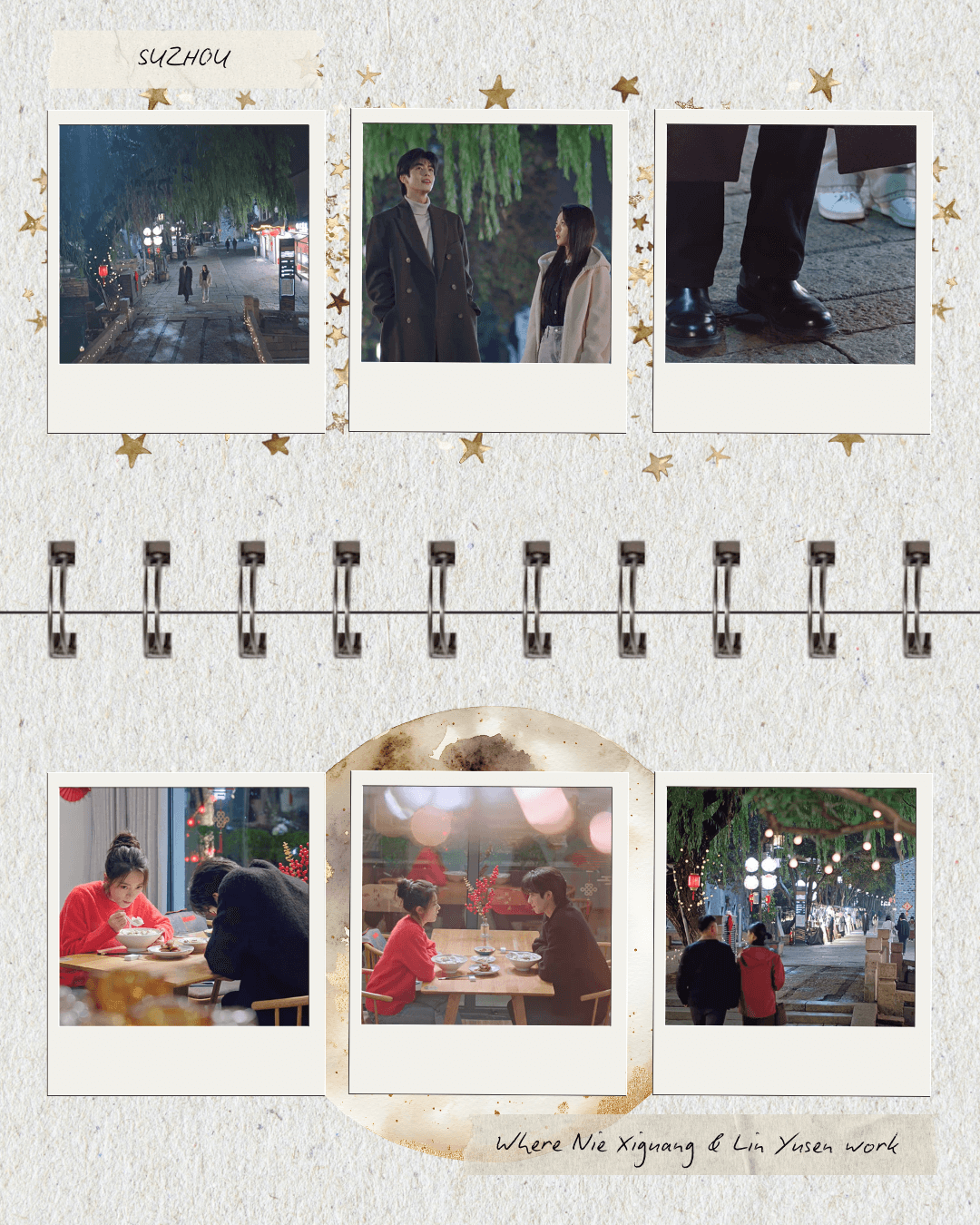
Suzhou is where Nie Xiguang and Lin Yusen are based. An eastern Chinese city in Jiangsu Province, around 30 minutes from Shanghai by high-speed train, Suzhou lies on the Jiangnan section of the Grand Canal and is crisscrossed by waterways that have shaped its landscape and culture for over 2,500 years. Classical gardens, canal-side streets, and arched stone bridges give the city its distinctive character.
After dinner, Lin Yusen and Nie Xiguang take an evening stroll along Pingjiang Road (平江路 Píngjiāng Lú), a historic canal-side street. Its largely preserved layout dates back to the Southern Song dynasty, with waterways and streets running parallel, creating the quintessentially Jiangnan scenery of bridges over flowing water, hanging lanterns, white walls, and dark-tiled roofs. Streetside snacks and local eateries serving Suzhou cuisine line the water’s edge.
They chat over wontons at Raopuji Restaurant (荛圃记餐厅 Ráopǔjì Cāntīng) in a lane off Pingjiang Road. Within walking distance is the famous Humble Administrator’s Garden (拙政园 Zhuōzhèng Yuán), an iconic Ming dynasty classical garden and a UNESCO World Heritage site, admired for its intricate pavilions, rockeries, and lotus ponds.
In one scene, while separated for work, Lin Yusen mentions over the phone to Nie Xiguang that he wants to hurry back to Suzhou to dine at Tongdexing (同得兴 Tóngdéxīng) with her. This is a shoutout to a Suzhou-style noodle house known for its fresh seasonal specialties. One signature dish is Fengzhen-style braised pork noodles, available only from May to October, made with white broth, white-braised pork, and sweet fermented millet. Tongdexing’s Jiayufang branch received a Bib Gourmand in the first edition of the Jiangsu Michelin Guide released in 2025.
Tiffilosophy Picks:
Suzhou Gardens Bracelet and Earrings, C-Drama-inspired Hanfu handmade jewellery set, by JianghuCreations on Etsy.
Handmade Suzhou Silk Embroidery Earrings, by ArtChineseDesigns with Meiling Li in Suzhou, on Etsy.
Pure Silk Handmade Embroidery Landscapes: Suzhou Water Town, Suzhou Water Town 2, Suzhou Garden, all by SilkartAustralia with Yao Huifen in Suzhou, on Etsy.
Wuxi
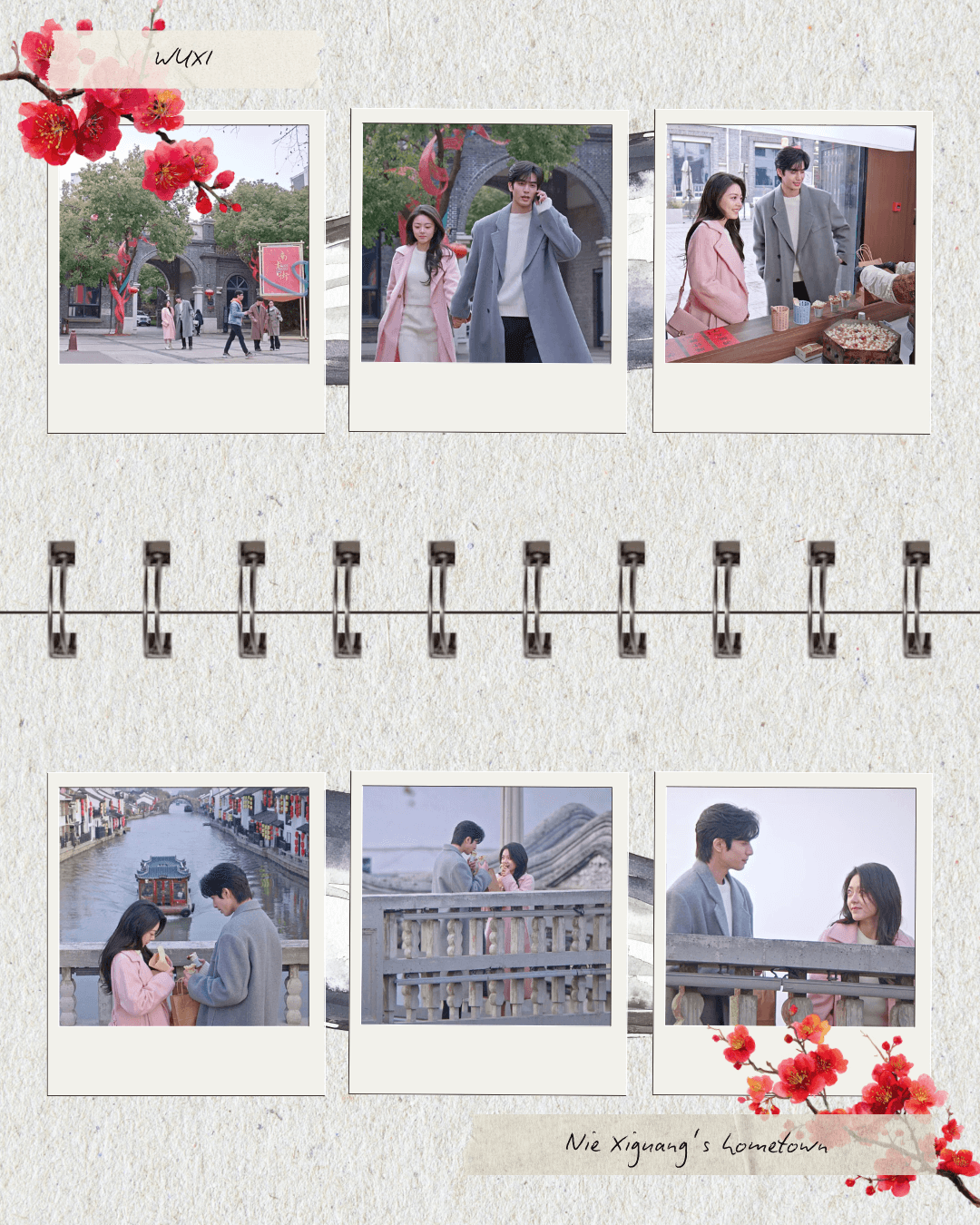
Wuxi is Nie Xiguang’s hometown, a city near Shanghai in China’s southern Jiangsu Province. When she gets the chance to show Lin Yusen around, she jokes that there isn’t much sightseeing to do. But as it turns out, there are many beautiful spots in Wuxi brimming with Jiangnan charm.
They spend an afternoon on Nanchang Street (南长街 Nánchāng Jiē), a historic street dating back to the Northern Song dynasty, when it served as a postal road linking Suzhou and Changzhou. The street runs alongside the Grand Canal, a waterway dating back to the Spring and Autumn Period connecting Beijing and Hangzhou.
The core section of Nanchang Street is the historical district centered around Qingming Bridge, built during the Ming dynasty. The district preserves more than a hundred historic buildings and nine bridges from the Ming and Qing dynasties, with the distinctive Jiangnan water-town characteristics of “small bridges, flowing water, riverside homes, and secluded old lanes” (“小桥、流水、人家以及幽深古巷” xiǎoqiáo, liúshuǐ, rénjiā yǐjí yōushēn gǔxiàng).
Lin Yusen and Nie Xiguang buy plum blossom cakes from Meijingsu (梅景苏 Méijǐngsū), a beloved traditional Jiangnan snack with roots dating back to the Ming and Qing dynasties. Shaped like their namesake flower and cooked in special molds, the cakes come with an assortment of fillings, such as taro, red bean, and savory meat, and are topped with thin strands of red and green candied garnish. Some newer versions include small glutinous rice balls, candied fruit, or pine nuts.
Legend has it that during his southern tours, the Qianlong Emperor tasted the snack, praised it highly, and bestowed on it the name ‘plum blossom cake’ (梅花糕 méihuā gāo).
In the drama, Nie Xiguang and Lin Yusen stop to enjoy their plum blossom cakes on Dagong Bridge (大公桥 Dàgōng Qiáo), overlooking the water. Completed in 1930, the bridge was funded by local industrialists after a female silk worker drowned crossing the canal by ferry. Built to serve tens of thousands of textile workers — most of them women — it remains a landmark of the historic district. It’s a fitting location to pause in a drama that champions women’s ambition and self-determination.
Tiffilosophy Picks:
Plum Blossom Digital Sticker Scrapbook Kit by CassieSimplePlanner on Etsy.
Plum Blossom Enamel Pin by LycheeMochii (Vanessa) on Etsy.
Xiaolongbao Soy Candle with Steamer Gift Set by SouveDeer (丹鹿 SouveDeer) on Etsy.
Shanghai
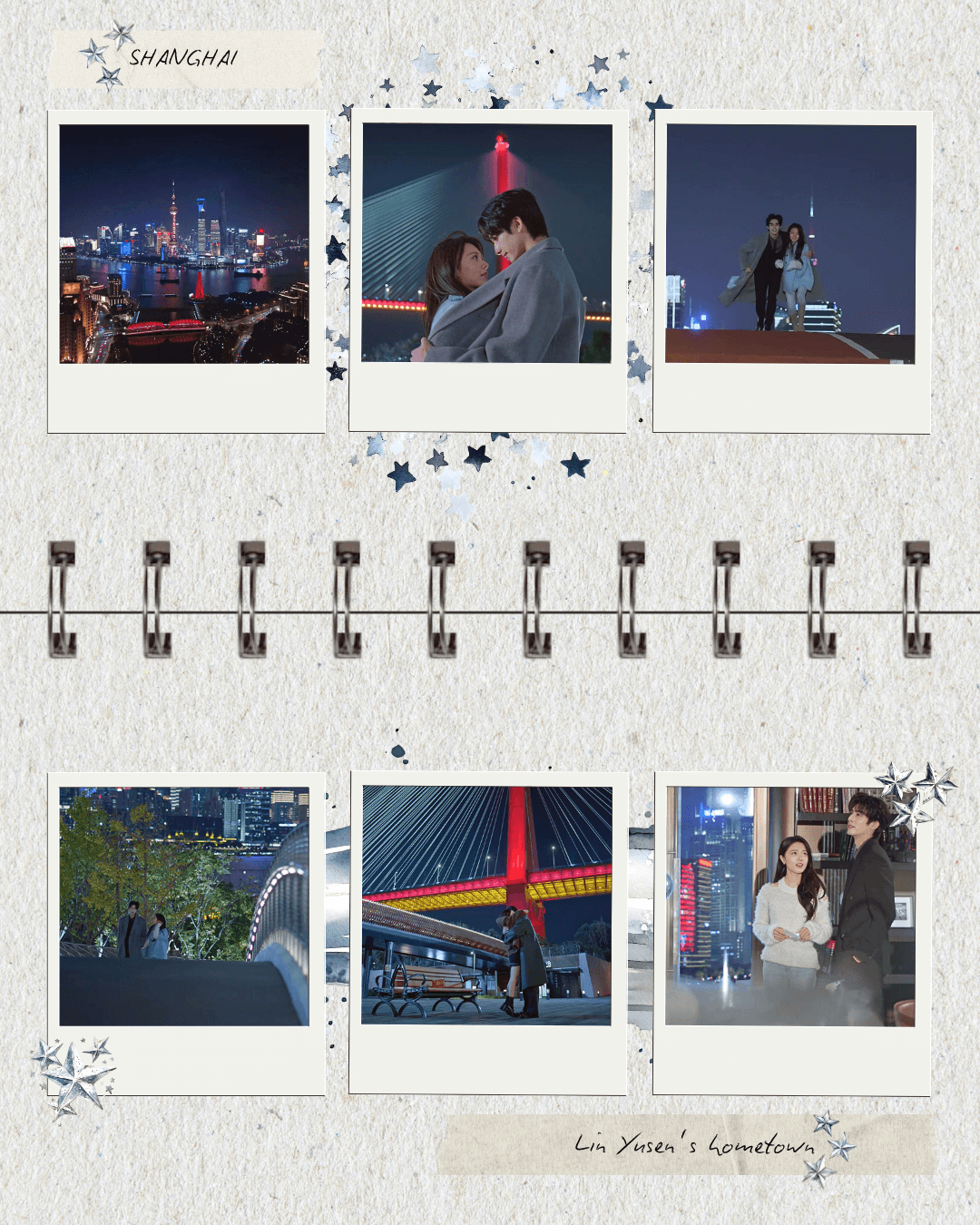
When Nie Xiguang visits Lin Yusen in his native Shanghai, she finds the city to be quintessentially part of his identity and charisma — confident and polished, blending old-world charm and innovative thinking, well-dressed and well-read.
Shanghai reveals itself through the Bund’s iconic waterfront promenade on the Huangpu River. In the city, Xiguang passes streets lined with plane trees, heritage buildings that combine traditional Chinese and Western architectural styles, and sleek contemporary high-rises, all coexisting in harmony.
Nie Xiguang and Lin Yusen spend quality time by the Huangpu River. On a windy evening, Lin Yusen envelops Nie Xiguang in his coat as they stroll near the water at Xiepu Road Ferry Crossing (歇浦路渡口 Xiēpǔ Lù Dùkǒu). In another scene, they meet along the East Bank Riverside Promenade (东岸滨江公共空间 Dōng'àn Bīnjiāng Gōnggòng Kōngjiān), a long, continuous public space designed for walking, running, and cycling on the waterfront.
Tiffilosophy Picks:
New Chinese Style Linen Midi Coat with Pockets, various color options, made by NaceLinenLife on Etsy.
Shanghai Flower Market Plum Blossom Art Print by BloomGalleryPrints on Etsy.
A Slow-Burn Romance
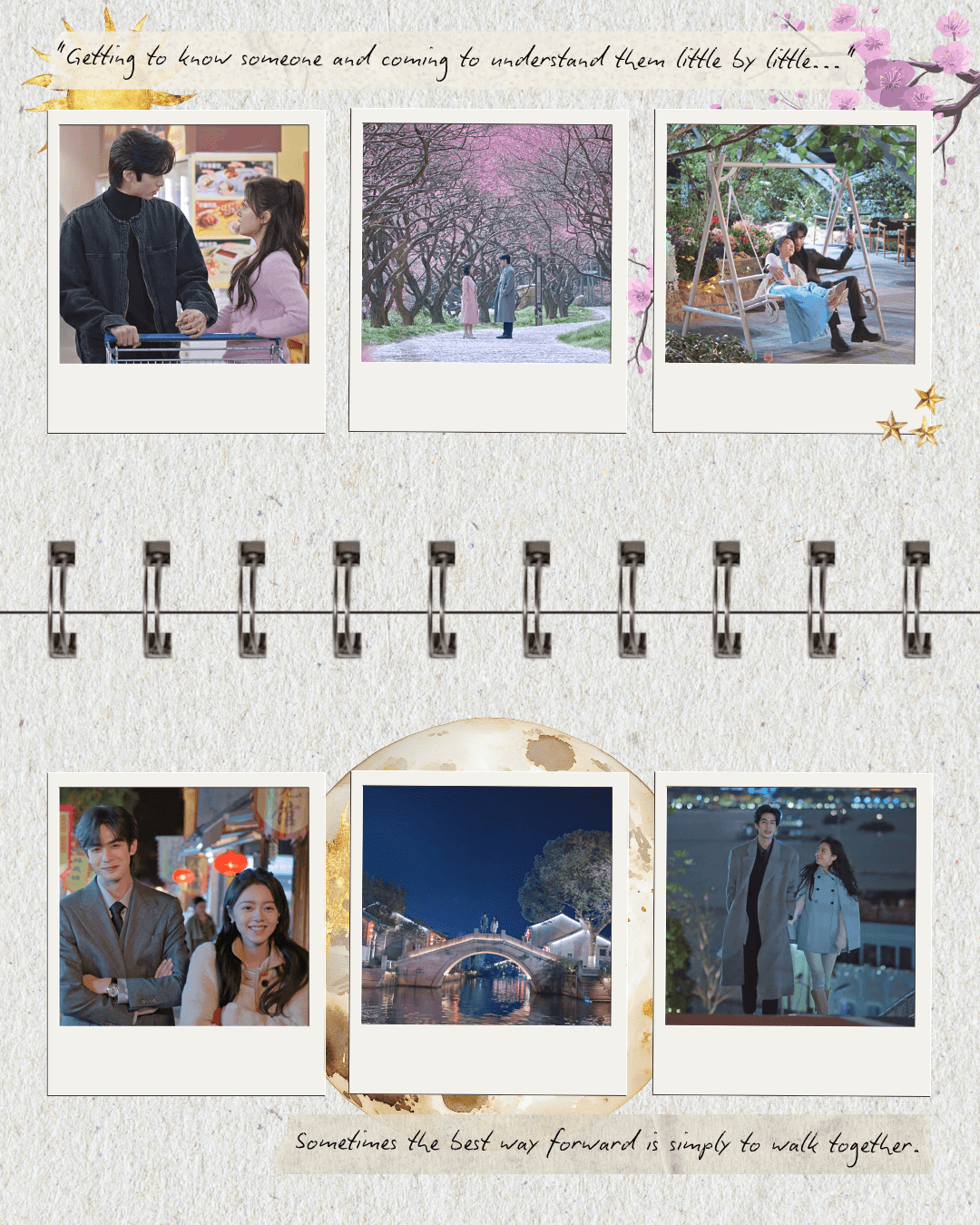
“This is the first time I’ve felt that taking it slow — gradually getting to know someone and coming to understand them little by little — is really nice,” Lin Yusen tells Nie Xiguang.
They like long walks. Strolling along stone-paved Pingjiang Road in Suzhou, tracing Nanchang Street in Wuxi, embracing along waterfront promenades in Shanghai. The stretches of walkways and winding canal paths in the drama become visual metaphors for how their relationship unfolds slowly, one step, one conversation, one revelation at a time.
It’s a slow-burn romance. The drama’s title promises a blazing sun, and the sun emerges as warmth coming from within. The characters reflect their names. Nie Xiguang, ‘dawn light,’ learns to trust her own light. Lin Yusen, ‘island forest,’ extends his branches in a new direction. Together, as sunlight and forest, they move toward each other in equal steps.
And through it all, Jiang-Zhe-Hu shines, winking with regional inside jokes, sweet xiaolongbao by the handful, and vibrant sunrises. ‘Shine on Me’ celebrates a sense of place, warmth that sustains rather than consumes, and the courage to grow slowly. Sometimes the best way forward is simply to walk together.